
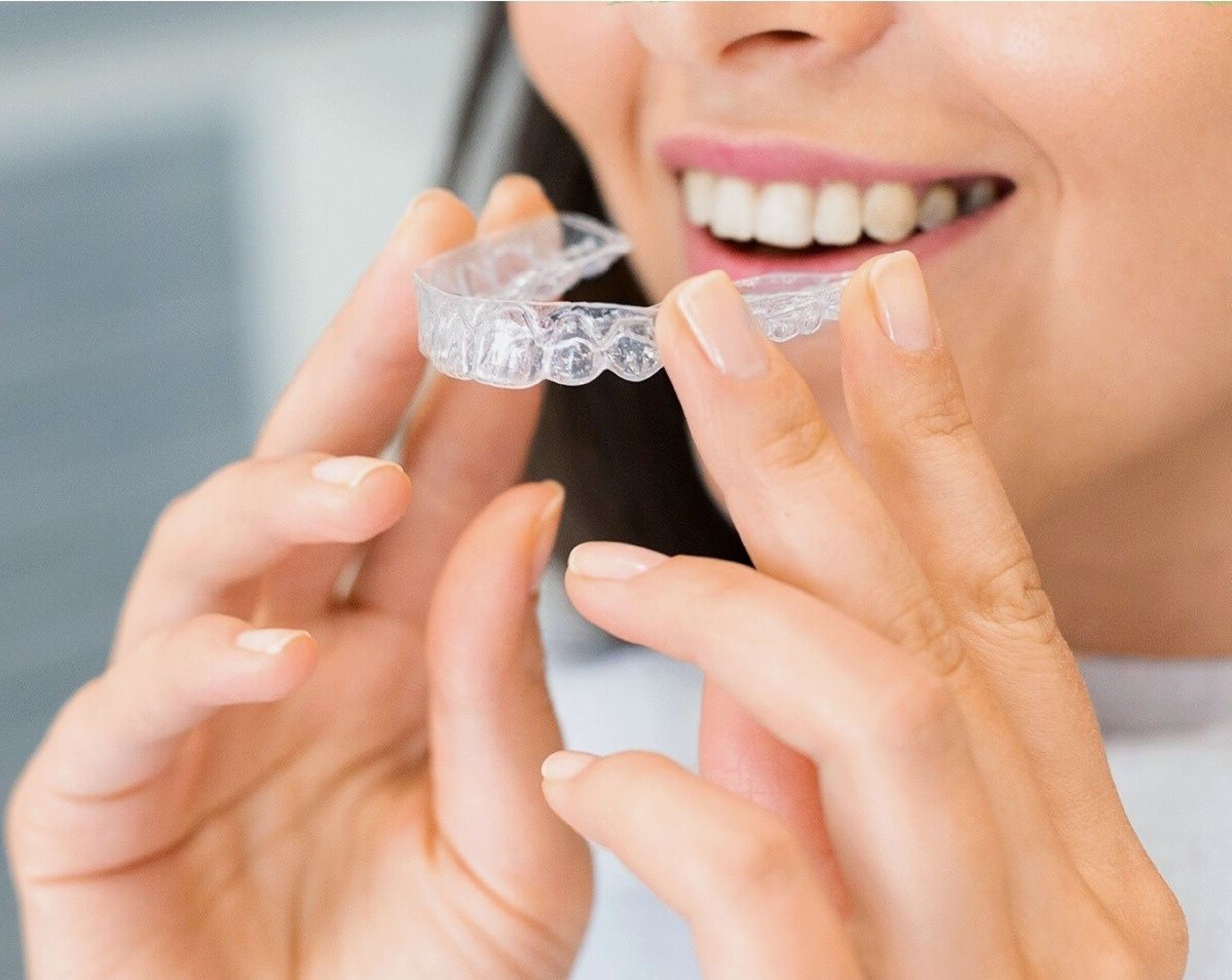
For adults with mild to moderate crowding or spacing concerns, clear aligners and traditional braces can both produce effective results. Which one suits you depends on your specific tooth movements, your lifestyle, and how consistently you can follow a treatment routine. A dentist assessment is the only way to know for certain.
How the Two Options Differ
The most visible difference is appearance. Clear aligners, such as Invisalign, are made from transparent plastic trays that fit closely over your teeth. Traditional braces use metal brackets bonded to each tooth, connected by wires and adjusted at regular appointments.
Removability is the other major distinction. Aligners come out for brushing, and flossing. Braces stay fixed in place for the full treatment period.
Daily Maintenance
With aligners, you remove the trays before meals and clean your teeth normally before putting them back in. The aligners themselves need to be rinsed and kept clean. The main discipline required is wear time. Shorter wear time can slow progress.
With braces, cleaning takes more effort. Food can collect around brackets and wires, so brushing and flossing require extra care and specific tools. Nothing depends on the patient remembering to put the appliance back in.
Which Cases Each Option Typically Suits
This is where candidacy matters most. A dentist assessment is required before any comparison becomes useful for your specific situation.
Clear aligners handle a range of tooth movements. Spacing between teeth, mild to moderate crowding, and some bite concerns are commonly treated with aligners. The term "mild to moderate" refers to cases where the amount of tooth movement needed falls within what aligner trays can reliably achieve at each stage of treatment.
Traditional braces can address a broader range of complexity. Cases involving more significant bite discrepancies, rotation of certain teeth, or movements that require precise, continuous force are often better suited to braces. A dentist or orthodontist will assess whether your specific tooth movements fall within what aligners can achieve.
Why Candidacy Is Not a Self-Diagnosis
A patient cannot determine their own candidacy from a list of symptoms. Two adults with teeth that look similarly crowded may have very different underlying bite relationships. One may be a straightforward aligner case. The other may need a treatment approach that aligners alone cannot provide. A clinical exam, photographs, and a digital scan are needed to establish which category you fall into.
Sopa Square Dental Clinic offers Invisalign clear aligners. If a consultation assessment finds that your case requires traditional braces, the team will discuss the appropriate next step with you.
Lifestyle Considerations for Adult Patients
Adults considering orthodontic treatment weigh factors that do not always apply to younger patients: professional appearance, sport and recreation, and the practical rhythm of daily life.
Eating and Drinking
With braces, hard foods such as raw carrots, apples, and nuts can damage brackets. Sticky foods can pull at wires. These restrictions apply for the full treatment period.
Speaking
Both options can affect speech briefly during adjustment periods. With braces, any change tends to follow each wire tightening. With aligners, some people notice a slight change in speech when switching to a new tray. This typically settles within a short time as the mouth adjusts.
Sports and Contact Activities
Aligners are removed for contact sports. This protects both the trays and your teeth, and a standard mouthguard fits normally during treatment.
With braces, a custom or orthodontic mouthguard is recommended. Standard mouthguards do not fit over brackets, and a bracket or wire coming loose during contact can extend treatment time.
Professional and Social Settings
Aligners are nearly invisible during normal conversation. Many adults choose clear aligners because treatment is less noticeable to others. For adults in client-facing roles or who present publicly, this is often a deciding factor.
Braces are more visible. Whether this matters to you depends on your work and social context, and is worth discussing with your dentist before you decide.
What "Mild to Moderate" Means and Why It Matters
Orthodontic case complexity describes how much tooth movement is required and in what direction. Dentists and orthodontists categorize cases by the type of movement involved and what a given appliance can reliably achieve.
A mild case might involve a small gap between two front teeth or minor overlapping that developed after a previous course of treatment. A moderate case might involve several teeth that are rotated slightly, or a small discrepancy in how the upper and lower teeth meet.
A complex case often involves significant bite issues, teeth that need to move through larger distances, or situations where jaw structure plays a role in the final outcome.
Clear aligners are suited to mild and moderate cases. For complex cases, braces or a combination of approaches may be recommended. Some patients who start treatment with aligners may need additional trays during treatment to fine-tune progress. A treating dentist monitors progress throughout.
The boundary between moderate and complex is not always obvious from looking in the mirror. A scan and clinical assessment are the first step, not an online quiz or a photo comparison.
What Happens at a Consultation
A good consultation will not leave you with open questions about whether you are a candidate. At Sopa Square Dental Clinic in South Kelowna, the Invisalign consultation includes a clinical exam, photographs, and a digital intraoral scan. The scan produces a 3D image of your teeth and bite. A proposed treatment plan shows the intended tooth movements, and you see a simulation of where your teeth are expected to be at the end of treatment.
Cost and timeline are confirmed after the exam and scan, not before. For more on what this appointment covers, our What to Expect at Your Invisalign Consultation article walks through each step.
If you are ready to find out which option suits your teeth, you can request an Invisalign consultation at Sopa Square Dental Clinic, or call 250-763-3720.
Frequently Asked Questions
Can adults use Invisalign, or is it mainly for teenagers? Invisalign is used by adults and teenagers alike. Adults often prefer it because treatment is less visible. Candidacy depends on the type and amount of tooth movement needed, not on age.
How do I know if my case is mild, moderate, or complex? You cannot determine this accurately without a clinical exam and scan. Two cases that look similar on the surface can require very different treatment approaches. A dentist will assess your bite, spacing, and gum health before recommending an option.
How much does Invisalign cost at Sopa Square Dental Clinic? Most Invisalign treatments at Sopa Square run $6,000 to $7,000, confirmed after the exam and scan. Cost depends on case complexity and the number of aligner trays needed. The clinic confirms your exact figure before treatment begins.
Will my insurance cover clear aligners? Some dental insurance plans include orthodontic coverage that may apply to Invisalign. Coverage depends on your specific plan. The team at Sopa Square can help you check your plan before treatment begins.